
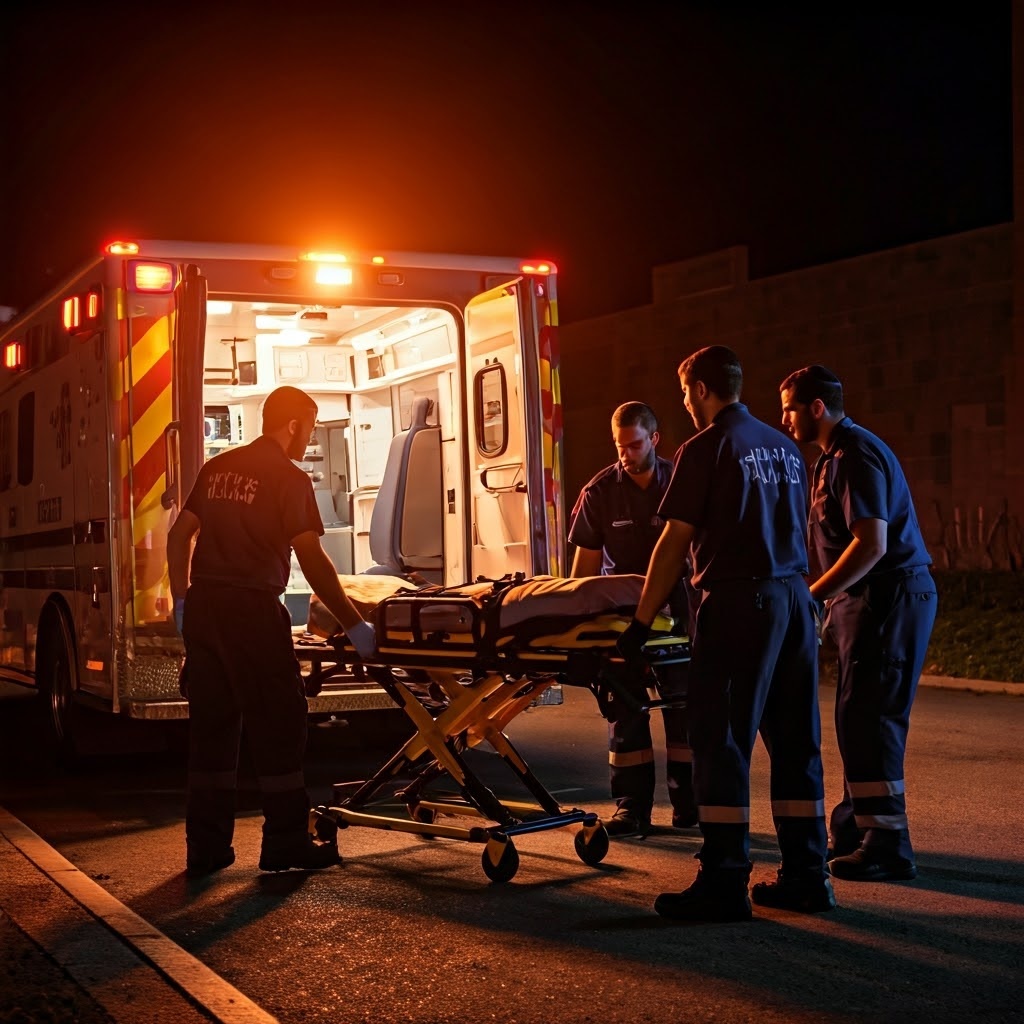
Communities invest heavily in protecting people from physical danger.
First responders wear body armor, they train in protective gear. Healthcare workers follow strict safety protocols. Equipment, training, and preparation are designed to keep people physically safe while they do demanding, high-risk work.
But when it comes to mental and physiological strain, the approach has historically been different.
Most support is focused on what happens before the workday—or after.
- Resilience training
- Wellness programs
- Peer support
- Therapy
- Self-care
All of these are important. But they miss something critical.
Burnout Isn’t About Stress—It’s About Unrecovered Stress
Burnout is often described as exhaustion, disengagement, or emotional fatigue.
But those are outcomes.
The underlying issue is more specific.
Burnout is what happens when stress accumulates without the body returning to baseline.
In many professions, stress isn’t something that comes and goes.
It continues.
When There Is No Pause
For many people, especially in high-responsibility roles, stepping away isn’t always possible.
- A nurse moving from one patient to the next
- A first responder going from call to call
- A teacher managing a full classroom all day
- A clinician holding multiple complex cases
- A rural provider covering multiple roles at once
In these environments, the expectation is clear:
Keep going. Stay focused. Perform.
And they do.
But while the work continues, the nervous system often remains activated.
There is no full reset between demands.
Stress That Doesn’t Reset, Stacks
The body is designed to handle stress.
What it is not designed for is continuous activation without recovery.
When stress response stays elevated:
- Heart rate and alertness remain high
- Cognitive load increases
- Emotional regulation becomes more difficult
- Sleep becomes less restorative
- Recovery takes longer—and eventually feels incomplete
Over time, this creates a pattern:
Activation—no full recovery—more activation—less recovery
Eventually, the system compensates by shutting down energy, motivation, and emotional capacity.
That is what we call burnout.
Burnout is Not a Failure of Strength
People in high-stress roles are often highly capable, committed, and resilient.
Burnout is not a reflection of weakness.
It is a reflection of how long the nervous system has been asked to stay activated without returning to baseline.
Why Traditional Approaches Fall Short
Most burnout strategies assume one thing:
That you can step away.
- Step away to breathe.
- Step away to reset.
- Step away to recover.
But what if you can’t?
What if the nature of the your role requires you to stay engaged, present, and responsive in real time?
In those moments, the nervous system still needs a way to come down—even if the situation hasn’t ended.
The Missing Piece: Real-Time Recovery
If stress is happening in real time, recovery has to be possible in real time as well.
- Not instead of therapy.
- Not instead of time off.
- Not instead of self-care.
But alongside the work itself.
When the nervous system can return to baseline, during ongoing demands:
- Stress is less likely to accumulate
- Cognitive clarity improves
- Emotional reactivity decreases
- Transitions between tasks become easier
- End-of-shift exhaustion is reduced.
Most importantly, the nervous system is given repeated opportunities to return toward baseline throughout the shift.
You Can’t Recover From Stress You Never Exit
This is the core issue.
Recovery cannot fully happen if the body never exits the stress response.
And for many people—especially in high-stakes or resource-limited environments—that exit never fully occurs.
Moving Forward
If we want to meaningfully address burnout, the conversation has to shift.
Not just toward awareness.
Not just toward after-the-fact recovery.
But toward supporting the nervous system during the moments when stress is actively happening.
Because the goal isn’t simply to try to recover after the shift is over.
It’s to make it possible to stay steady while doing the work.
Final Thought
Burnout doesn’t happen all at once.
It builds—quietly, gradually—through moments that never fully resolve.
Understanding that changes how we approach it.
And more importantly, it opens the door to solutions that meet people where they are:
in the middle of the moment, not just after the shift is over.